
Capital One Robo Advisor - Account Opening
The Customer Problem
Investing can be complicated and overwhelming. Most people can't afford to hire a financial advisor and don't feel confident managing their own trades. And with so many Robo Advisor options out there, it's hard to know which company is the right fit for you.
The Business Problem
In 2017, Capital One decided to sell their investing and financial advice business. As the fifth largest bank in America, Capital One needs a strong investing product to stay competitive with bigger banks. Since they have limited investing products to bring in revenue, any new product needs to be as low-cost as possible. And because the Robo Advisor market is so crowded, this product also needs to stand out from the competition.
My Role
Defining design strategy
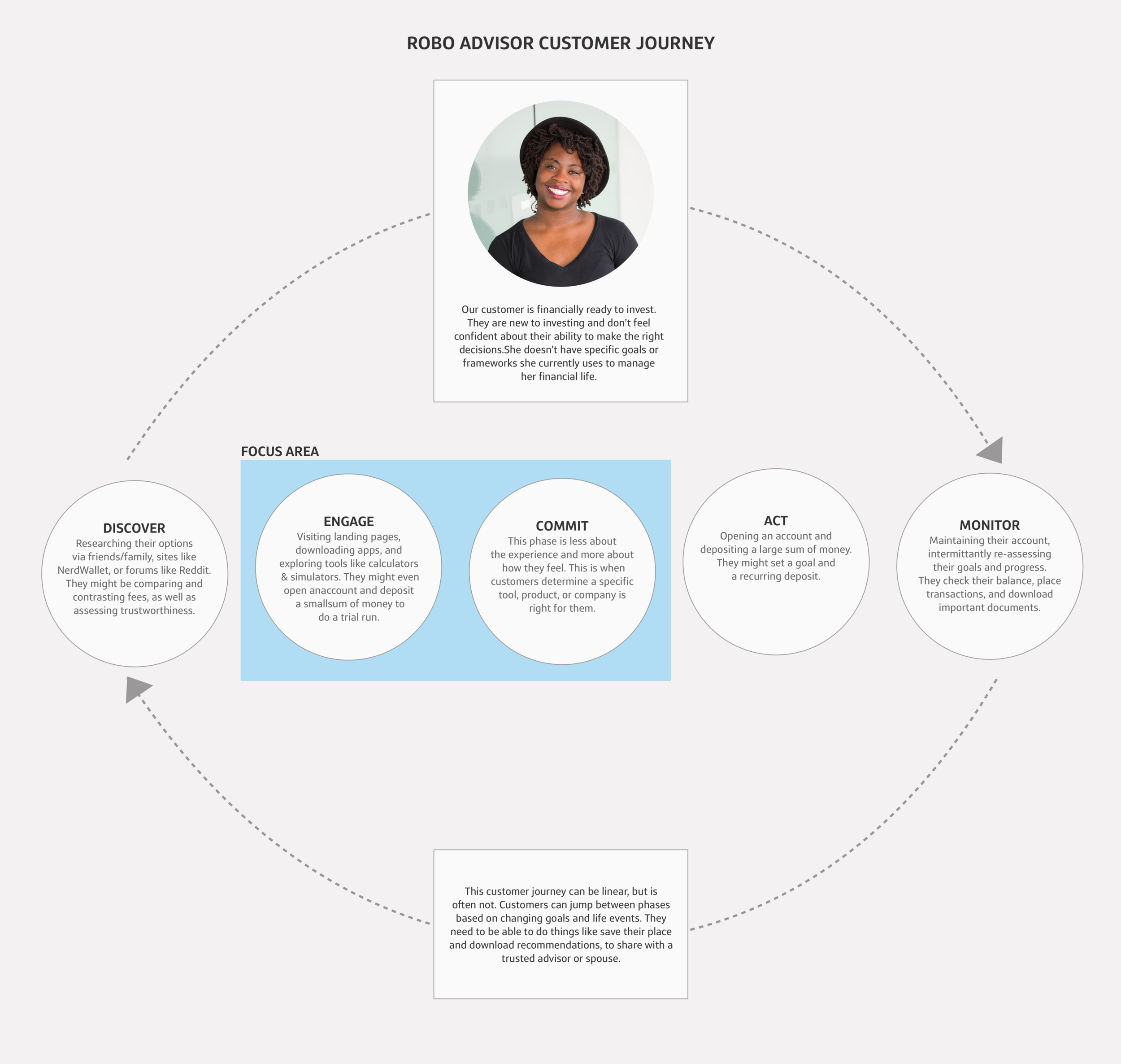
Collaborating with our multidisciplinary UX team to define a customer journey
Identifying focus areas for innovation based off of our customer journey and data from our legacy investing products.
Translating conceptual ideas into an implementable end to end experience
Defining frameworks for help content that aligned to our design principles
Working with product and regulatory partners to determine the scope of the experience.
Socializing and promoting our experience with VP+ level executives at Capital One.
My Approach
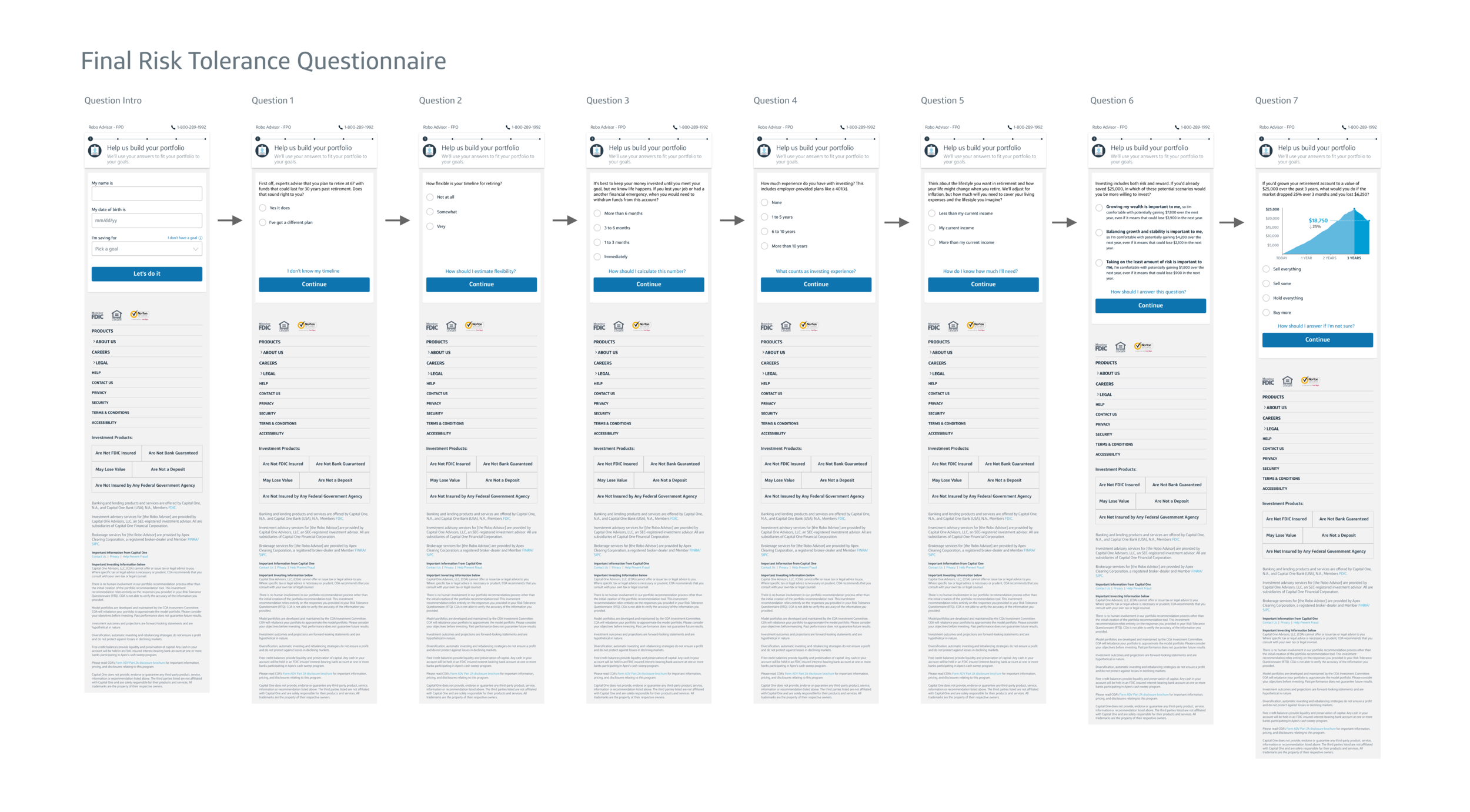
Due to regulatory requirements, a standard account opening flow is about 19 screens long. My goal was to simplify the experience so new investors wouldn't feel overwhelmed.
The risk tolerance questionnaire made up the bulk of account opening, so I focused on translating complex questions into simple, approachable language.
I used behavioral economics techniques to ease customers into the experience and help them understand the value of a Robo Advisor.
Some parts of the experience, like transferring money and collecting personal information, had strict constraints and were out of scope for launch.
Given Capital One's platform limitations, I prioritized a lightweight experience that still delivered value to customers.

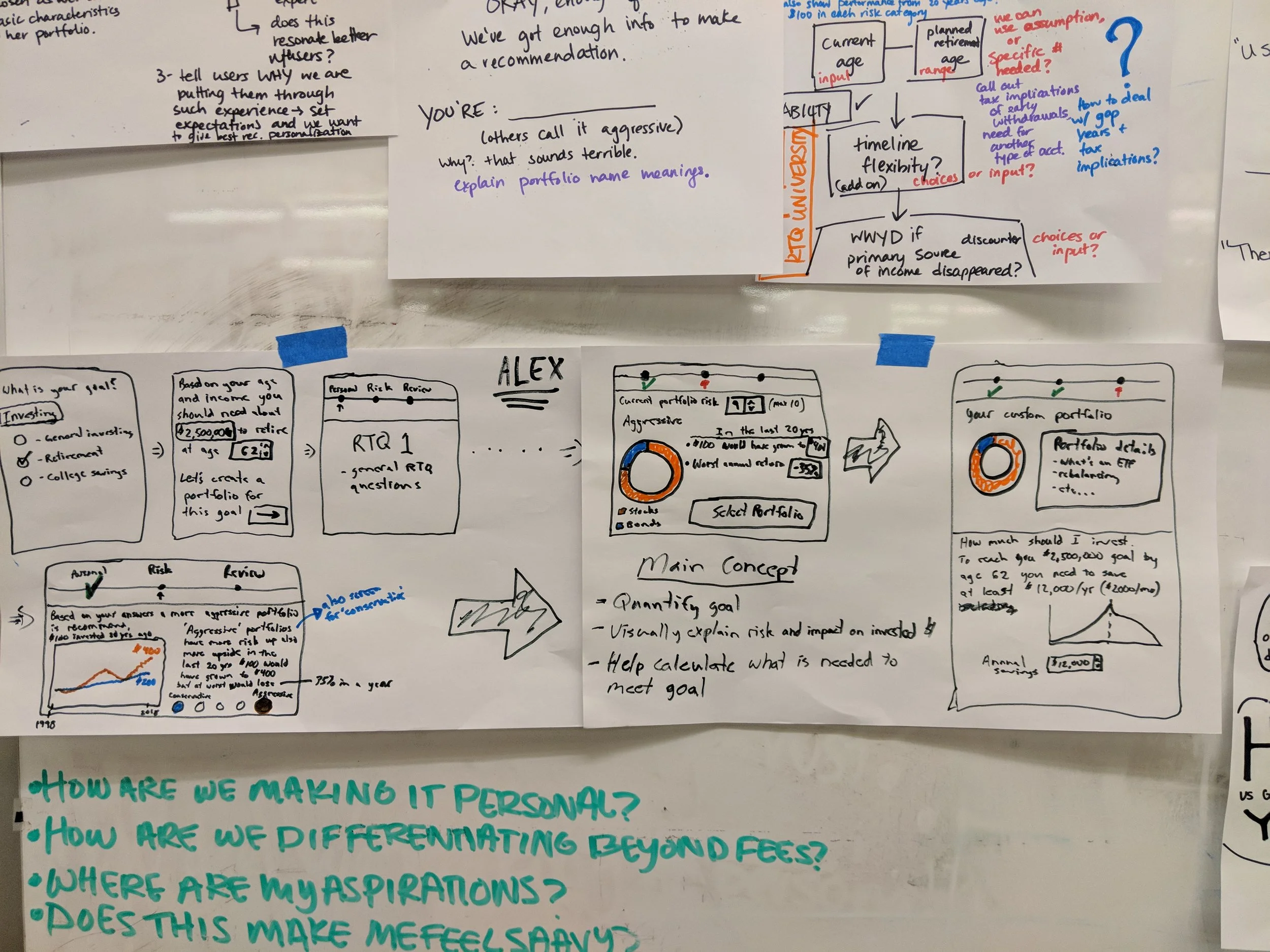
These are three different versions of the risk tolerance questionnaire, created by focus group participants. They were tasked with comparing our experience to two industry competitors and working together to create their ideal questionnaire. This research yielded lots of rich insights and helped us establish high confidence in our experience.
What is a Risk Tolerance Questionnaire (RTQ)?
A short assessment to understand willingness and ability to take on risk in order to sort users into a predetermined portfolio.
In order to simplify onboarding, it was critical to take a principled approach to the RTQ. I developed these principles through competitor and foundational research. Due to the complexity of this experience, several rounds of user research was required to refine the design.
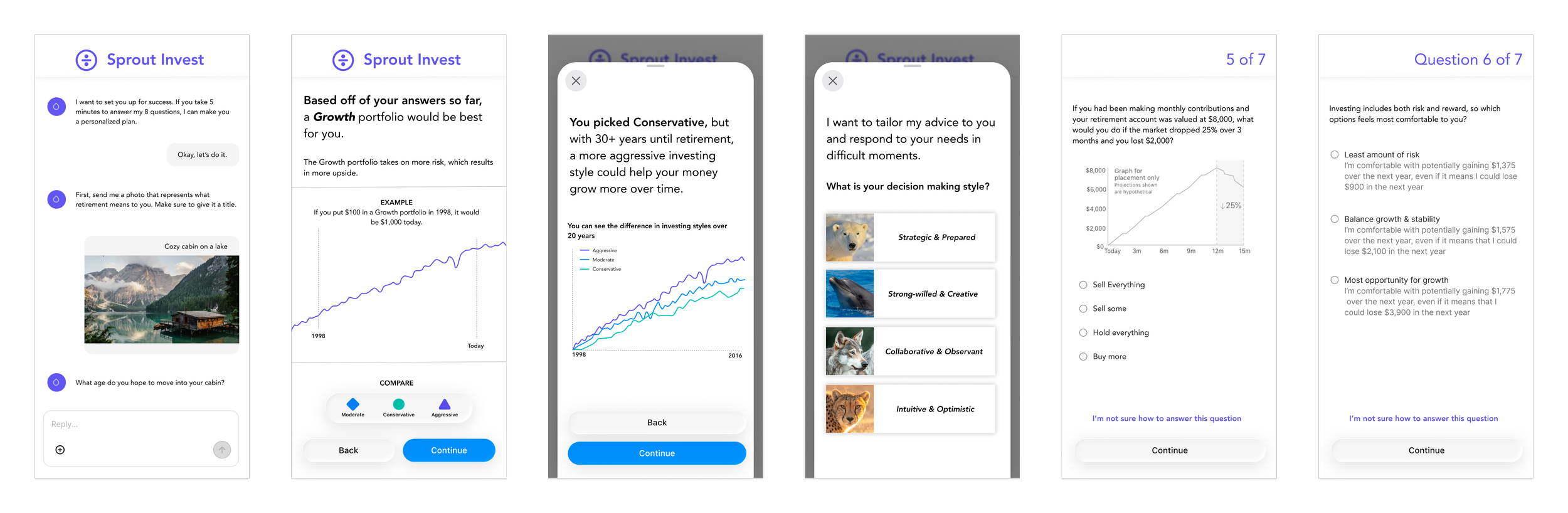
A selection of concepts developed for user testing.
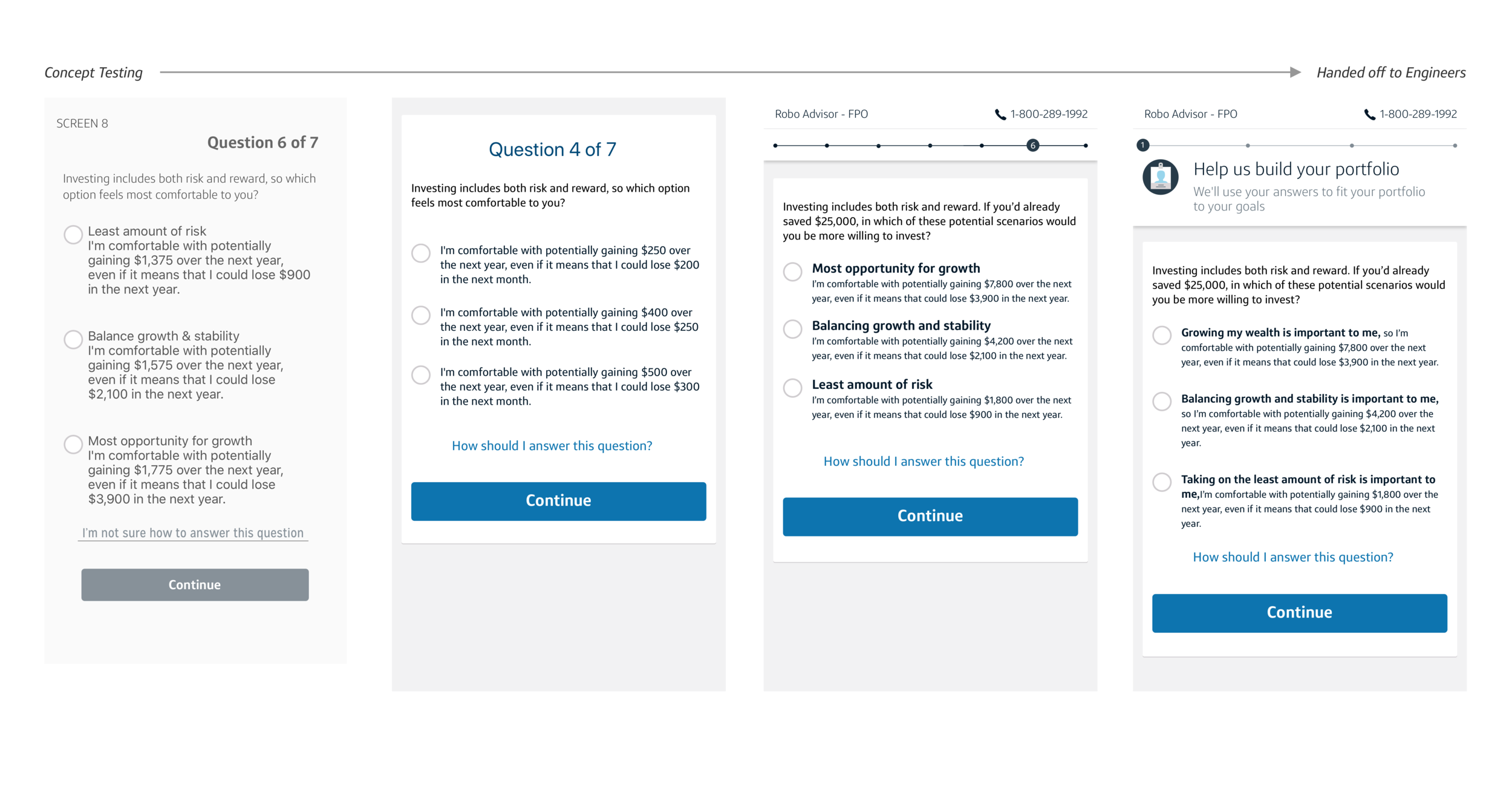
The flow and individual questions went through many iterations, here is an example of how one required question evolved through research and feedback.
Result
Over a few months, I facilitated 5 ideation sessions and created 13+ prototypes, giving our team the confidence to land on the right experience. The biggest challenges stemmed from ambiguity. Using human-centered design, I built buy-in with key stakeholders and turned them into customer advocates. Through concept testing and refinement, we created a risk tolerance questionnaire that was easy to understand and helped customers feel like confident investors — using techniques like progressive disclosure, data visualization, and behavioral economics to stand out from competitors.
This project was also a rare win in working with our regulatory partners, successfully shifting their perspective toward a more customer-centered approach.